Transformer Oil Filtration Machine Buying Guide: 8 Things to Check Before You Order
Key takeaways
- This transformer oil filtration machine buying guide covers the 8 points that decide oil quality, uptime and cost.
- Capacity (LPH) matters, but vacuum level, moisture and BDV results matter just as much.
- Ask for every performance figure in numbers, with the test conditions.
- For wet oil, choose a machine with an integrated oil-water centrifuge.
- Check service, spare parts and lead time before you compare prices.
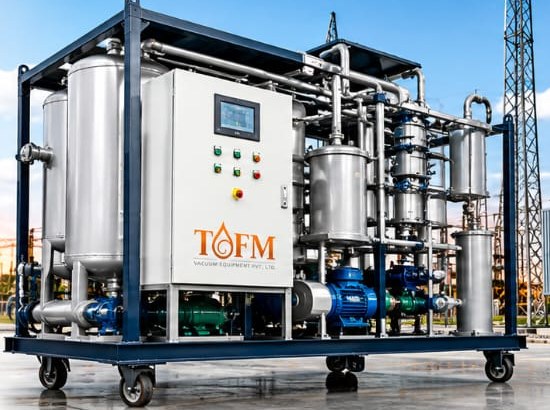
This transformer oil filtration machine buying guide gives you eight points to check before you order. In short, compare capacity, vacuum level, final moisture and BDV, filtration rating, heating, wet-oil handling, controls, and after-sales support. Two machines with the same LPH can produce very different oil, so price alone is not a fair comparison.
Transformer oil filtration machine buying guide: what should you check?
Use this checklist when you compare quotations:
- Capacity in LPH
- Vacuum level
- Moisture and BDV after treatment
- Filtration rating
- Heating and temperature control
- Wet oil handling (centrifuge)
- Controls, safety and mobility
- Service, spare parts and lead time
The sections below explain each point in plain terms.
1. How much capacity do you need?
Choose capacity from your oil volume and the time you have on site. For example, 10,000 litres through a 2,000 LPH machine takes about 5 hours per pass. Our capacity guide shows the full calculation. TOFM builds machines from 500 LPH to 20,000 LPH.
2. What vacuum level should the machine reach?
A deeper vacuum removes water and gases more effectively. Therefore, ask for the vacuum level in mbar, not just "high vacuum". TOFM machines work at 760 mmHg gauge, which is below 0.1 mbar absolute.
3. What moisture and BDV should the oil reach?
Ask the supplier for final moisture in ppm and BDV in kV, together with the test method. For instance, TOFM machines bring oil to 3 to 5 ppm moisture and BDV up to 80 kV after treatment. Read our BDV guide to understand these numbers.
4. What filtration rating do you need?
Fine filtration removes the small particles that lower BDV. Look for a rating of 1 micron or finer. In addition, check how easy it is to change the filter cartridges.
5. How is the oil heated and controlled?
Heaters warm the oil so water and gases leave it in the vacuum chamber. Good machines use low watt density heaters and accurate temperature control, so the oil never overheats. TOFM controls oil temperature up to 65 °C.
6. Can the machine handle very wet oil?
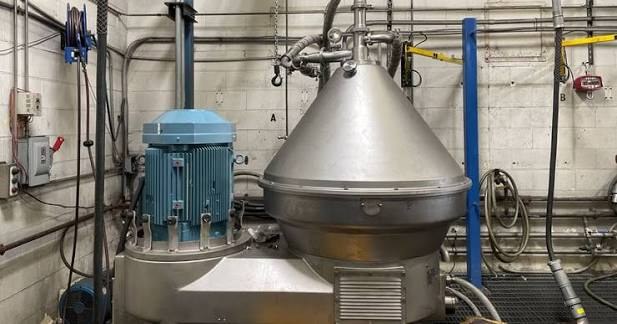
Oil with free water or sludge slows down vacuum treatment. As a result, a machine with an integrated oil-water centrifuge handles wet oil much better. The centrifuge removes the bulk water first, then the vacuum stage finishes the job.
7. Which controls, safety features and build should you choose?
In addition, automation reduces operator mistakes. Look for PLC / HMI controls, interlocks and clear vacuum and temperature displays. Then decide on the build:
| Build | Best for |
|---|---|
| Mobile (trolley or skid) | Utilities and contractors treating oil at many substations |
| Stationary plant | Transformer factories, repair shops and oil stores |
8. What service and spare parts support will you get?
A machine is only useful when it runs. So check who supplies filters, heaters and vacuum pump spares, and how fast. Also confirm the lead time. TOFM accepts orders from 1 unit, builds in up to 60 to 70 days, and supplies service and spare parts.
What questions should you ask the manufacturer?
- What vacuum level, final moisture and BDV will this model reach, and under which test conditions?
- What is the filtration rating, and how often do the filters need changing?
- Is an oil-water centrifuge available for wet oil?
- Which spare parts do you stock, and how quickly can you dispatch them?
- What installation support and training do you provide?
For oil condition limits, refer to IEC 60422 or IS 1866.
Summary
Before buying a transformer oil filtration machine, compare eight points: capacity, vacuum level, final moisture and BDV, filtration rating, heating control, wet-oil handling, controls and build, and service support. Ask for every figure in numbers with test conditions. Choose an integrated centrifuge for wet oil, and check spare parts and lead time before comparing prices. TOFM builds machines from 500 LPH to 20,000 LPH that reach 3 to 5 ppm moisture and BDV up to 80 kV.
Frequently asked questions
What is the most important thing to check in a transformer oil filtration machine?
Check the oil quality it delivers: final moisture in ppm and BDV in kV, with the test method. Capacity tells you how fast it works, but these numbers tell you how well.
What vacuum level should a transformer oil filtration machine have?
Ask for the figure in mbar. TOFM machines work at 760 mmHg gauge, which is below 0.1 mbar absolute, for effective drying and degassing.
Should I buy a mobile or a stationary machine?
Choose a mobile machine if you treat oil at many sites, such as substations. Choose a stationary plant for a transformer factory, repair shop or central oil store.
Do I need an oil-water centrifuge?
You need one if your oil often contains free water, emulsion or sludge. The centrifuge removes the bulk water first, so the vacuum stage can dry the oil quickly.
What filtration rating is best for transformer oil?
A rating of 1 micron or finer removes the small particles that lower BDV. TOFM machines filter to 1 micron or finer.
How long does it take to get a machine from TOFM?
TOFM builds machines in up to 60 to 70 days, depending on capacity and configuration, and accepts orders from 1 unit.
This article gives general technical guidance. Always follow the transformer manufacturer's instructions and the standards that apply to your equipment.