Oil-Water Centrifuge vs Vacuum Filtration: When Does Transformer Oil Need Both?
Key takeaways
- An oil-water centrifuge separates free water and heavy sludge from oil by density, using a rotating bowl.
- Vacuum filtration removes dissolved water and gases, and fine filters remove particles.
- A centrifuge does not remove dissolved water, and vacuum filtration slows down when oil carries a lot of free water.
- Heavily water-contaminated oil benefits from both, in this order: centrifuge first, then vacuum filtration.
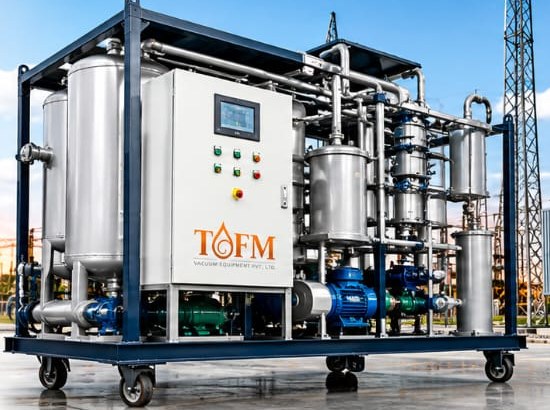
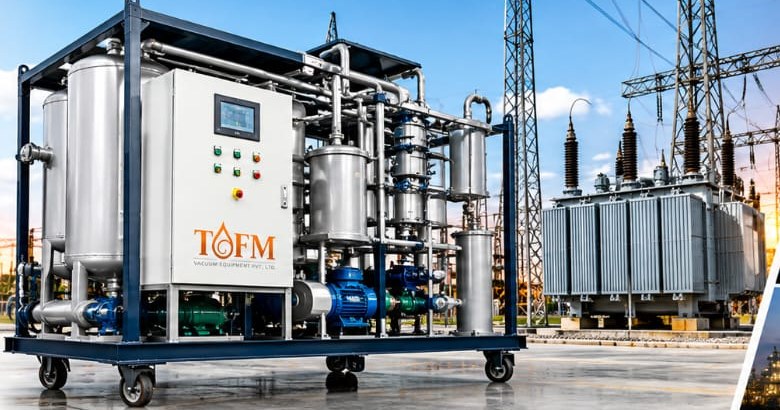
- TOFM integrates the centrifuge into its transformer oil filtration plant, so both stages run as one system.
An oil-water centrifuge spins oil at high speed so that free water and heavy particles, which are denser than oil, separate out. Vacuum filtration, by contrast, removes dissolved water and gases under vacuum and filters out fine particles. Oil with heavy free-water contamination needs both: the centrifuge first, then vacuum filtration.
This article compares the two methods and explains when to use each one.
What is the difference between free water and dissolved water in oil?
Free water is water that oil cannot hold in solution. It shows up as droplets, a cloudy emulsion or a layer at the bottom of a tank. Dissolved water, by contrast, is spread through the oil at a molecular level and cannot be seen.
The difference matters because each method targets a different form of water. A centrifuge works on free water. Vacuum dehydration works on dissolved water.
How does an oil-water centrifuge work?
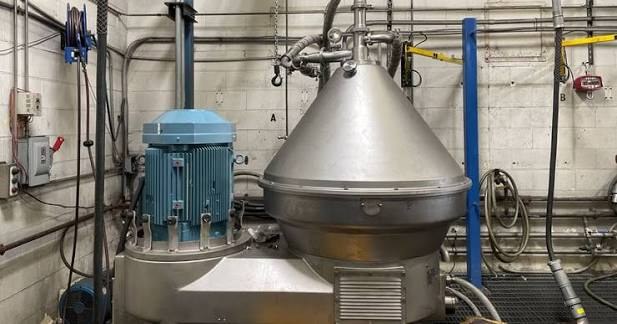
An oil-water centrifuge uses a motor-driven bowl that spins the oil at high speed. The rotation creates a force many times stronger than gravity, so denser free water and sludge move outward and the lighter oil moves inward. The machine then discharges the water and the oil through separate outlets.
This works quickly on large volumes of free water. However, a centrifuge cannot pull dissolved water or gases out of the oil, because these do not separate by density.
How does vacuum filtration work?
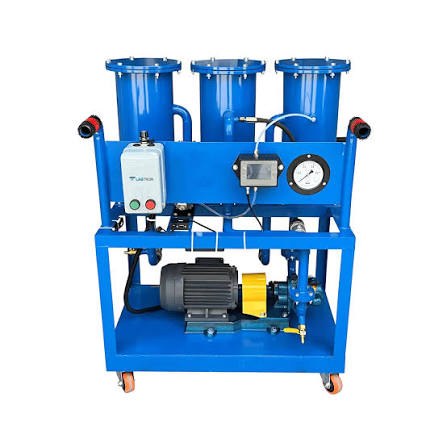
Vacuum filtration heats the oil and spreads it into thin films inside a vacuum chamber. Low pressure lowers the boiling point of water, so dissolved water evaporates. Dissolved gases also leave the oil. Fine filters then remove particles.
Vacuum treatment is the method that brings transformer oil to low moisture levels. Nevertheless, when oil arrives with large amounts of free water, the vacuum stage has to evaporate all of it, and progress slows down. You can read the full process in how transformer oil filtration works.
How do the two methods compare?
| Factor | Oil-water centrifuge | Vacuum filtration |
|---|---|---|
| Working principle | Density separation in a rotating bowl | Evaporation under vacuum, plus fine filters |
| Free water and emulsion | Removes bulk free water quickly | Removes it, but slowly when there is a lot |
| Dissolved water | Does not remove | Removes |
| Dissolved gases | Does not remove | Removes (degassing) |
| Sludge and heavy particles | Removes | Removed by filters, which can clog |
| Fine particles | Partly | Removed by fine filters |
| Best used for | Pre-treating wet, dirty oil | Final drying, degassing and polishing |
When does transformer oil need both?
Transformer oil needs both methods when it contains visible free water, emulsion or sludge. Typical cases include:
- Oil drained from equipment that has been flooded or had a water leak.
- Oil from the bottom of storage tanks, where water and sludge settle.
- Turbine and governor oil in hydro-electric plants with seal or cooler water ingress.
- Bulk oil reconditioning projects where incoming oil quality varies.
In these cases, run the centrifuge first. It takes out the bulk water and sludge, which protects the filters and lets the vacuum stage focus on dissolved water and gases.
What is an integrated centrifuge and filtration plant?
An integrated plant puts the centrifuge and the vacuum filtration stages on one system with shared controls. Oil flows from the centrifuge straight into the heater, vacuum chamber and filters, so operators run one plant instead of two separate machines.
TOFM builds this configuration in-house. The oil-water centrifugal separator is integrated with the TOFM transformer oil filtration plant, a capability few oil filtration manufacturers offer.
How do you decide which you need?
Start with an oil test and a visual check. Then use this simple rule:
- Clear oil, high water content in tests: vacuum filtration alone is usually enough.
- Cloudy oil, visible droplets or a water layer: use a centrifuge first, then vacuum filtration.
- Sludge or high acidity: treat the water and particles, and also discuss reclamation or oil replacement, because neither method removes dissolved acids.
For oil condition limits and test methods, refer to IEC 60422 or IS 1866.
Summary
An oil-water centrifuge and vacuum filtration solve different problems. The centrifuge removes free water and sludge by density; vacuum filtration removes dissolved water and gases and polishes the oil with fine filters. Clear oil with high water content usually needs vacuum filtration alone. Cloudy oil, emulsions and sludge need the centrifuge first. An integrated plant, such as TOFM's, runs both stages as one system.
Frequently asked questions
Can a centrifuge dry transformer oil on its own?
No. A centrifuge removes free water and heavy particles, but it cannot remove dissolved water or gases. Transformer oil still needs vacuum dehydration to reach low moisture levels.
Why does vacuum filtration slow down with very wet oil?
The vacuum stage has to evaporate all the water in the oil. When there is a large amount of free water, that takes much longer, so removing the bulk first with a centrifuge saves time.
What is the difference between an oil-water centrifuge and a hydro cyclone?
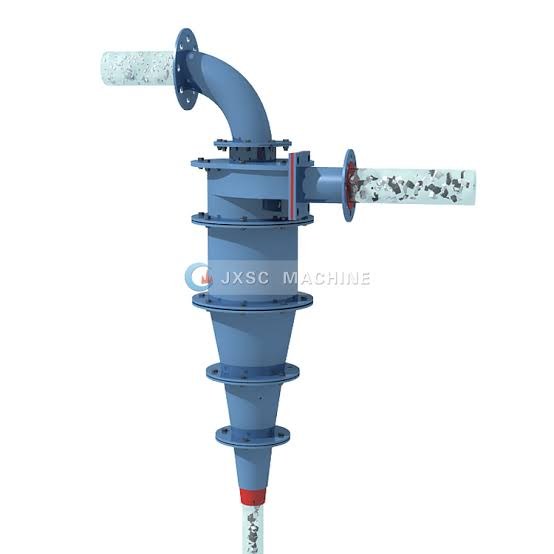
A centrifuge uses a motor-driven rotating bowl and gives strong separation of fine droplets. A hydro cyclone has no moving parts and uses the energy of the pumped flow, which suits coarser solids.
In what order should the centrifuge and vacuum stages run?
Run the centrifuge first to remove free water and sludge. Then heat the oil, dry and degas it under vacuum, and finish with fine filtration.
Does TOFM offer an integrated centrifuge and filtration plant?
Yes. TOFM integrates an oil-water centrifugal separator with its transformer oil filtration plant, so both stages run as one system with shared controls.
This article gives general technical guidance. Always follow the transformer manufacturer's instructions and the standards that apply to your equipment.